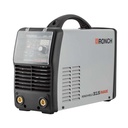

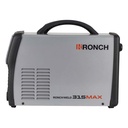
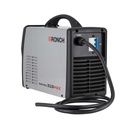
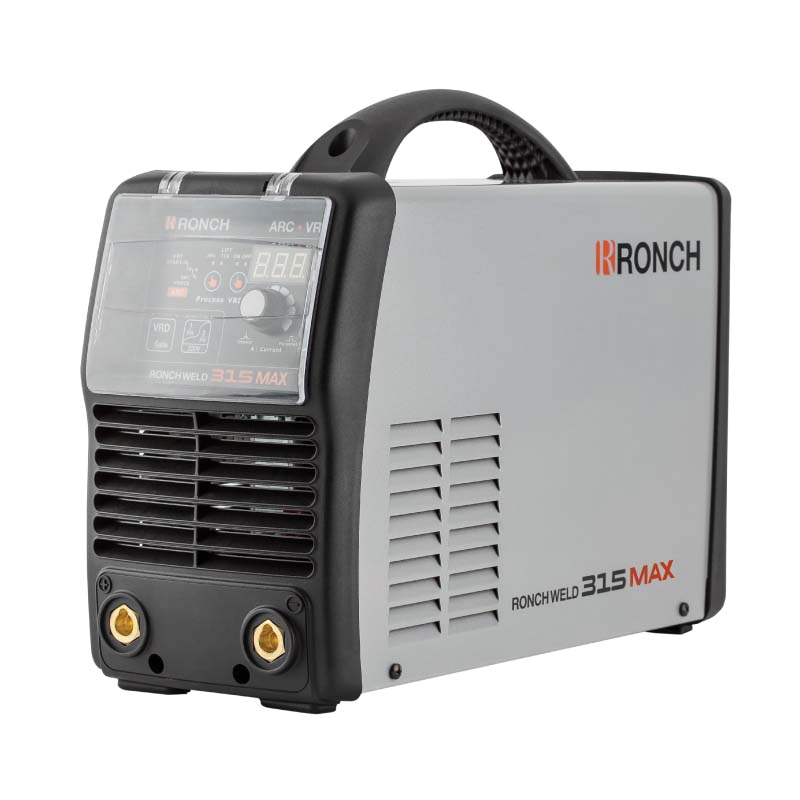
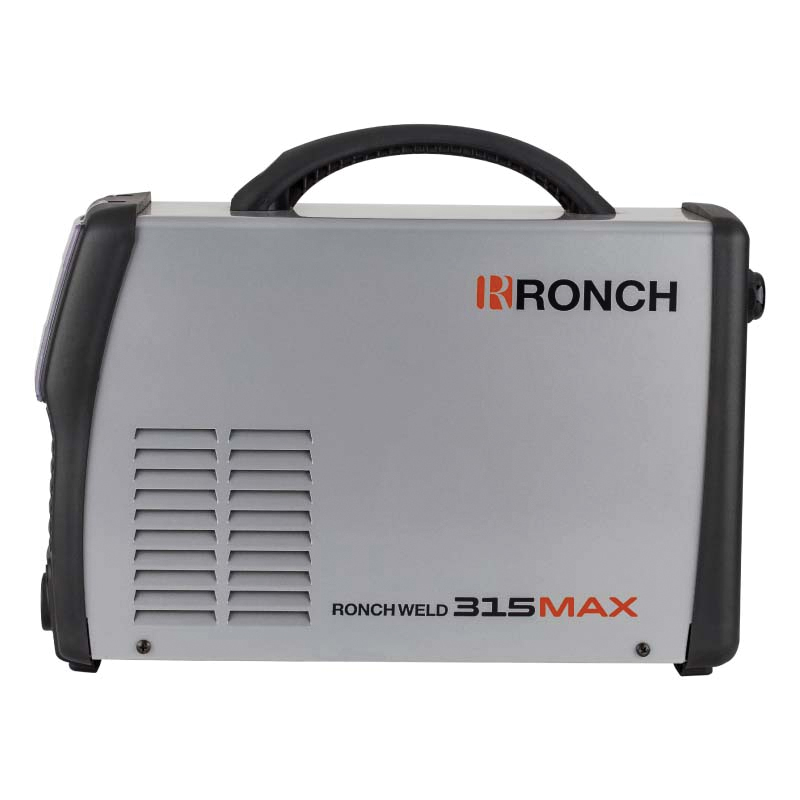
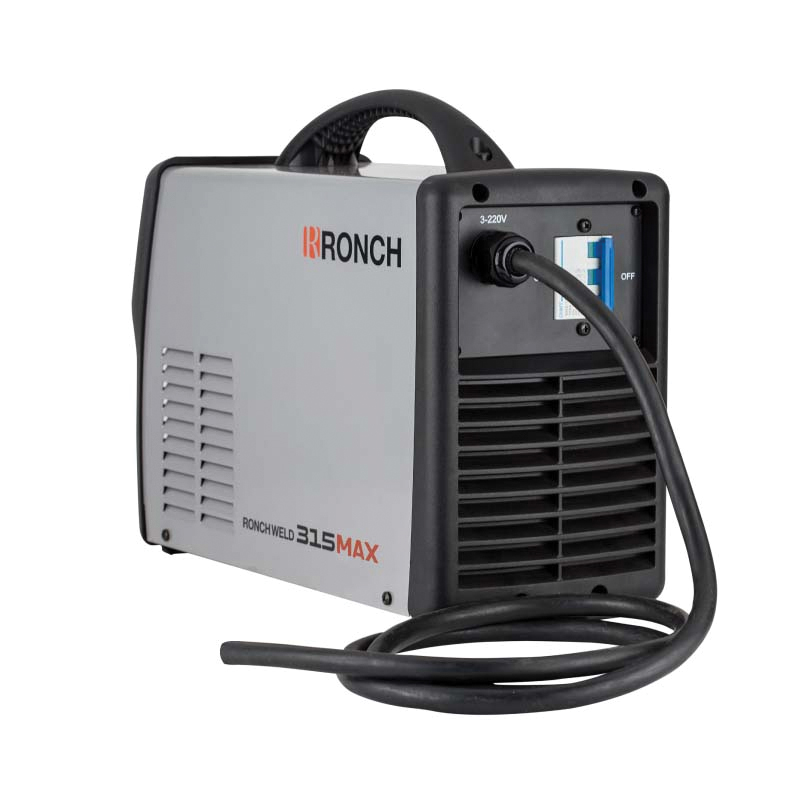
The Ronch 315 MAX combines TIG (Lift DC) and MMA/Stick, digital display, Hot Start, Arc Force and Anti-sticking, VRD for MMA, and is designed to work with diesel generators and input voltage spikes.
In addition, the Ronch 315 MAX welding equipment offers single-phase and three-phase input at 220 V (50/60 Hz) and a heavy-duty duty cycle suitable for long days in the workshop or on site.
Technical specifications of the Ronch 315 MAX
| Feature | Single-Phase | Three-Phase |
|---|---|---|
| Input power (V) | 220/230±10% | 220/230±10% |
| Nominal input power (KW) | 9.1 / 6.0 | 12.5 / 9.0 |
| Rated input power (A) | 55/40 | 23/17 |
| Work cycle (40ºC 10min) | 180A a 100% 225A a 60% | 220A a 100% 280A a 60% |
| Current range (A) | 10~250 | 10~315 |
| No-load voltage (V) | 105 | 93 |
| Efficiency (%) | 85 | |
| Frequency (Hz) | 50/60 | |
| Net weight (kg) | 15 | |
| Shipping dimensions (mm) | 480 x 190 x 340 | |
| Electrode diameter | 1.6 - 5.0 | |
| Electrode type | 6010, 6011, 6013, 7018 etc. | |
| Power factor | 0.7 | |
| Refrigeration | AF | |
| Isolation class | H | |
| Protection class | IP23 |
Benefits of having reliable, state-of-the-art TIG welding equipment
- Clean finish and spatter control: TIG is characterized by not generating slag and producing very little spatter, as well as allowing precise heat and material input, which reduces rework and increases the perceived quality of visible and sanitary parts.
- Stable DC arc for steel and stainless steel: In DC TIG, the arc is usually more stable and controllable, with less spatter and predictable penetration, perfect for critical joints and tight tolerances.
- Less fume generation: GTAW produces very little fume compared to other processes (always applying ventilation and safety controls), contributing to a cleaner working environment.
- Productivity in real conditions: MMA performs very well outdoors and with surface variations. TIG, on the other hand, provides a “showcase” aesthetic. Having both processes in the same equipment optimizes investment and space.
- Safety and operational continuity: Thermal/electrical protections, VRD, and generator readiness increase effective production time and protect the equipment from input spikes.
Sectors that use TIG welding the most
Food and pharmaceuticals: stainless steel pipes and tanks (sanitary finish, no inclusions). TIG is preferred for cleanliness and control.
Oil & Gas / Energy: critical passes and pipe roots in steel/stainless steel with DC TIG; fills can be completed with other processes according to WPS.
Metalworking: tools, cabinets, instrumentation, and precision parts.
Transportation/automotive: visible elements in stainless steel and steel where finish is important.
Construction and metal architecture: stainless steel railings, frames, and decorative details.
Industrial maintenance: controlled repairs with minimal distortion and the possibility of MMA outdoors with the same equipment.
Frequently asked questions about the Ronch 315 MAX
1. Is it suitable for TIG welding aluminum?
The 315 MAX is TIG DC (Lift). For TIG welding aluminum, an AC/DC power source is recommended.
2. What are the advantages of Lift TIG if it does not have HF?
Lift simplifies ignition (without high frequency), reduces interference, and, with the right technique, offers clean starts on steel/stainless steel.
3. What is the duty cycle in numbers?
At 40°C (10 min): 180 A@100% / 225 A@60% (single) and 220 A@100% / 280 A@60% (tri). Program your welds to avoid thermal shots.
4. Can I connect it to generators?
Yes. It is designed to work with diesel generators and is prepared for input peaks. Use stable generators with adequate power.
5. What protections does it incorporate?
Temperature, voltage, and current sensors. VRD in MMA. IP23, Class H, and Protect 440 V.
6. What electrodes does it support and what diameter?
1.6–5.0 mm. 6010/6011/6013/7018, among others. Adjust amperage according to diameter, joint, and position.
7. What gas should be used for TIG welding stainless steel and steel?
Normally high-purity argon. The TIG process is clean, with low spatter and no slag.
8. How is the duty cycle defined and what happens if it is exceeded?
It is the percentage of arc ignition within 10 min. If exceeded, the overheating protection activates and you must allow cooling before resuming.
9. What are Hot Start, Arc Force, and Anti-sticking for?
They improve ignition, stabilize the weld pool, and prevent electrode sticking in MMA, increasing productivity and reducing defects.
10. Weight and dimensions for transport?
Approx. 15 kg and 480 × 190 × 340 mm, easy to move around the plant or construction site.